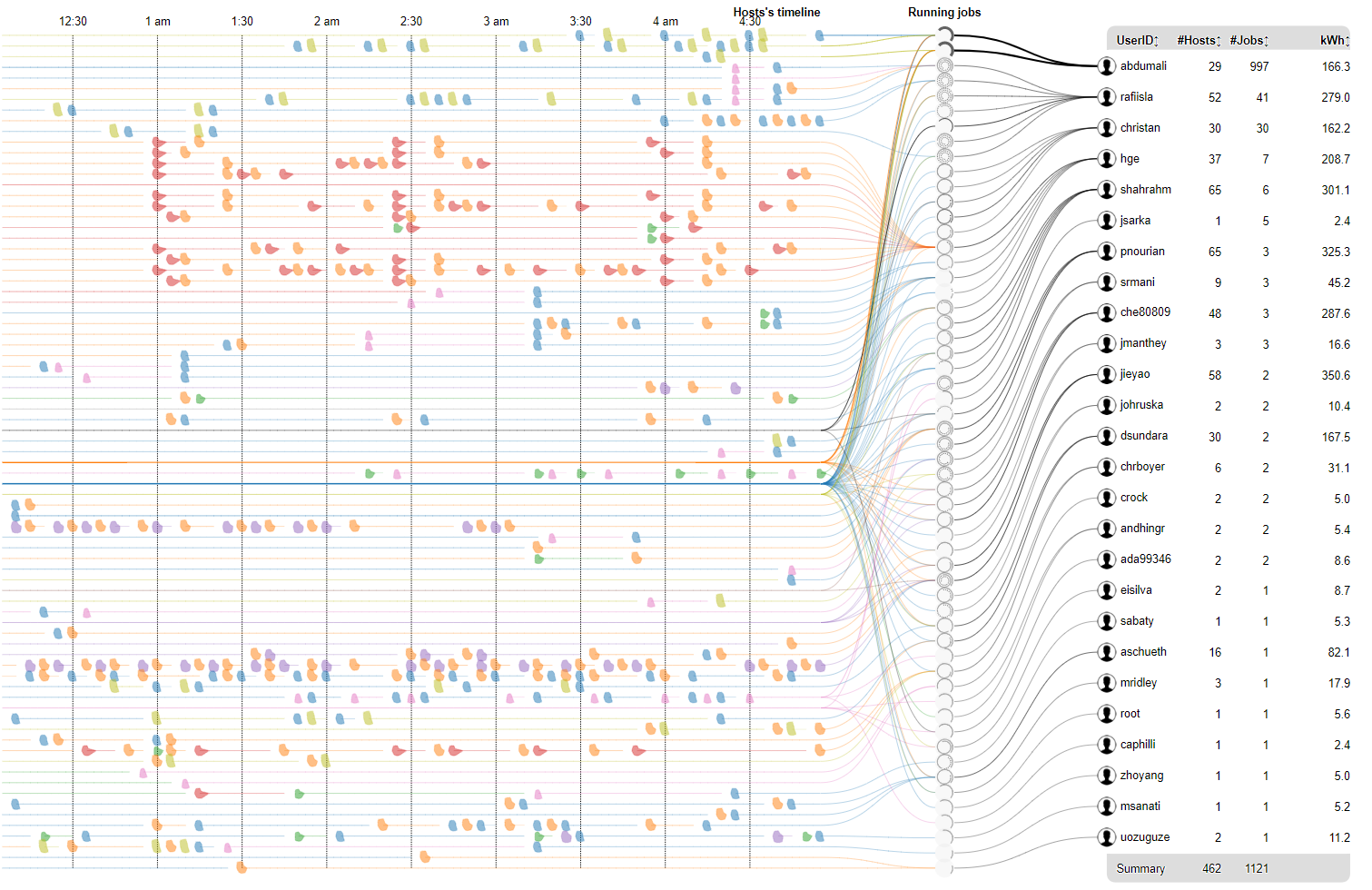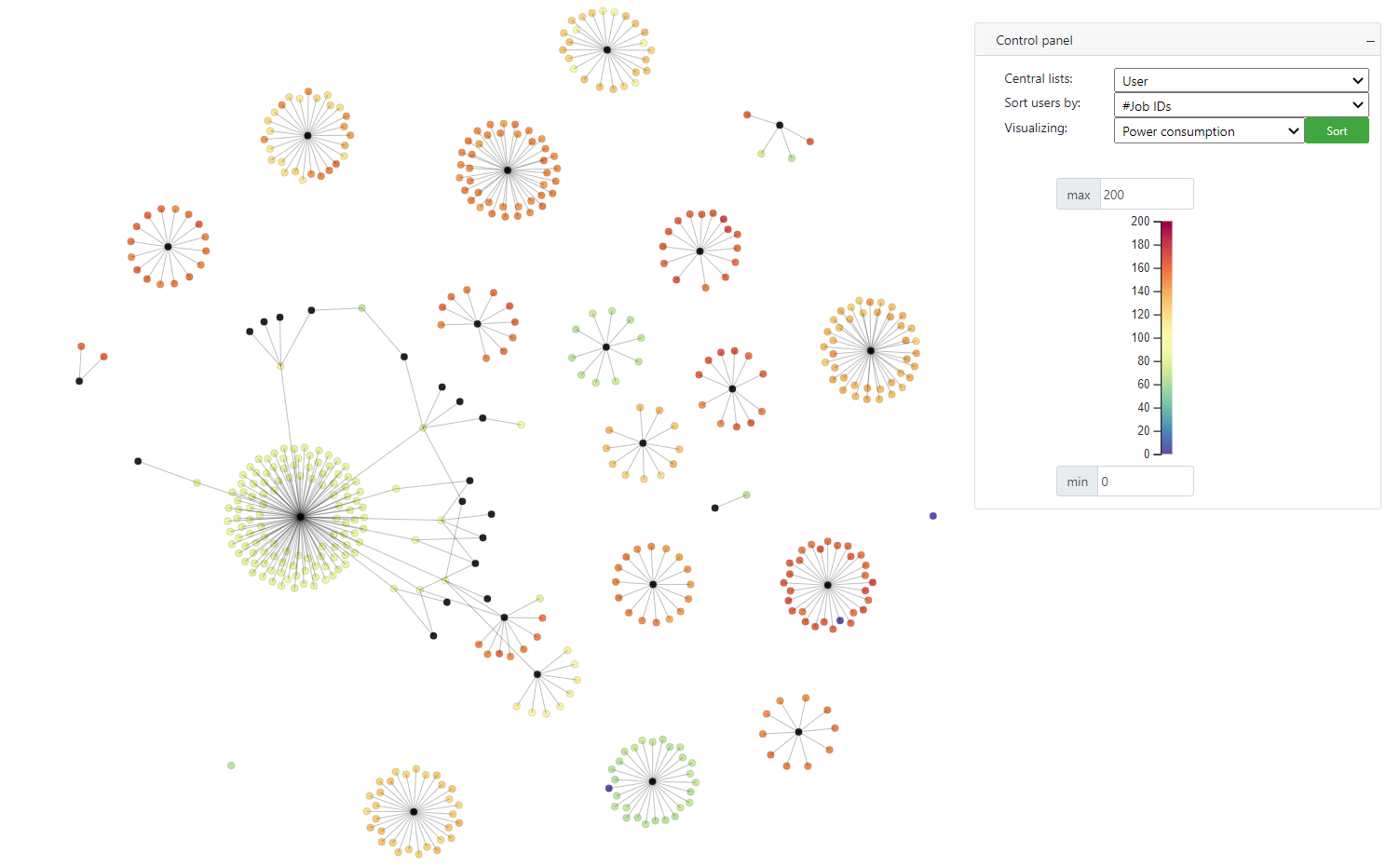
Where do the jobs on a supercomputer actually live — and who do they share a roof with?
A high-performance computing center runs thousands of jobs at once, scattered across racks of nodes. JobNet asks where those jobs sit in the machine and how their placement evolves — turning raw scheduler logs into a structure you can actually walk through.
Two views, one question
The 2D view is for reading: a clean node–link layout that answers “which nodes are this job using right now?”. The 3D view is for exploring: time becomes an axis you can fly along, so structural patterns that repeat across hours or days stand out as physical shapes rather than flickering frames.
Why operators care
- →Spot fragmentation — jobs spread thin across the machine instead of packed tight.
- →Trace noisy neighbours — co-located jobs that contend for the same shared resources.
- →Audit scheduling policy — does the placement the scheduler chose match the intent?
JobNet appeared in LNCS vol. 13017, built in the iData Visualization Lab at Texas Tech as part of the HiperView/HPCC monitoring suite, alongside TimeRadar, JobViewer, and HiperVR.